Last Updated:
Arcady Temple Land Clearing arranges pasture clearing across Bell County, with the work done by independent, insured clearing contractors. Bringing pasture back from brush is a different job from clearing a lot. The goal is grass, the acreage is larger, and cost per acre matters more than a manicured finish. The method follows the brush: young growth can be shredded, cedar mulched, and heavy mesquite grubbed.
What happens on the first visit
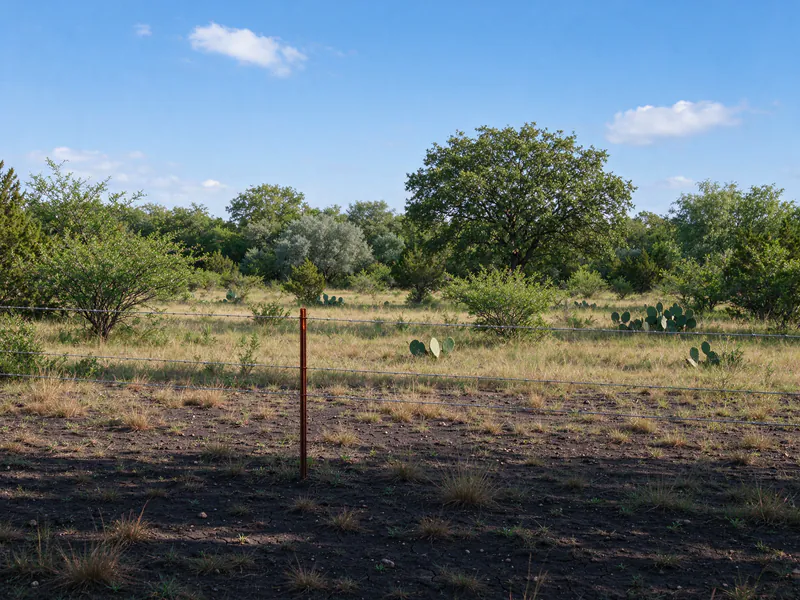
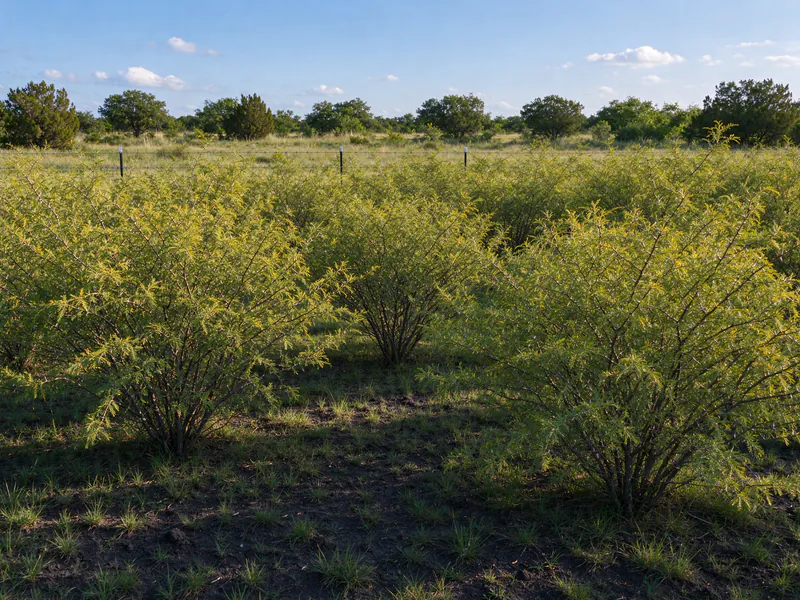
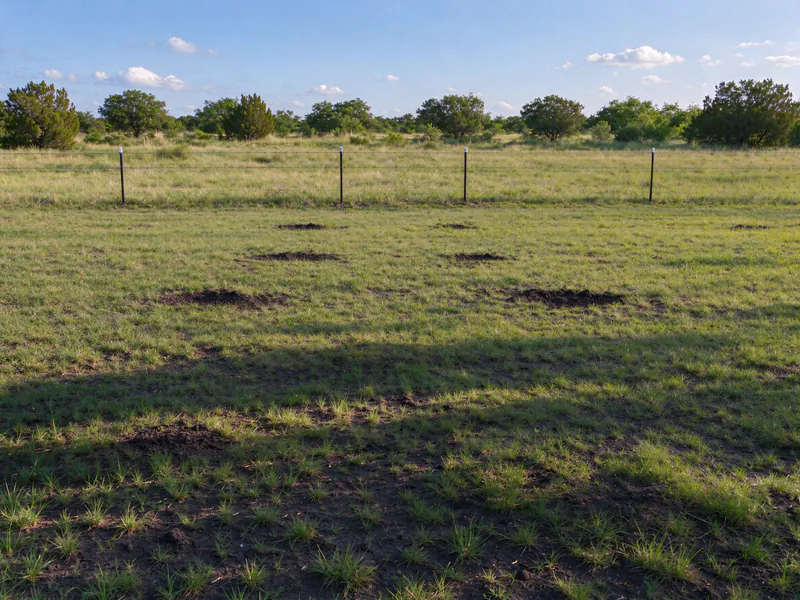
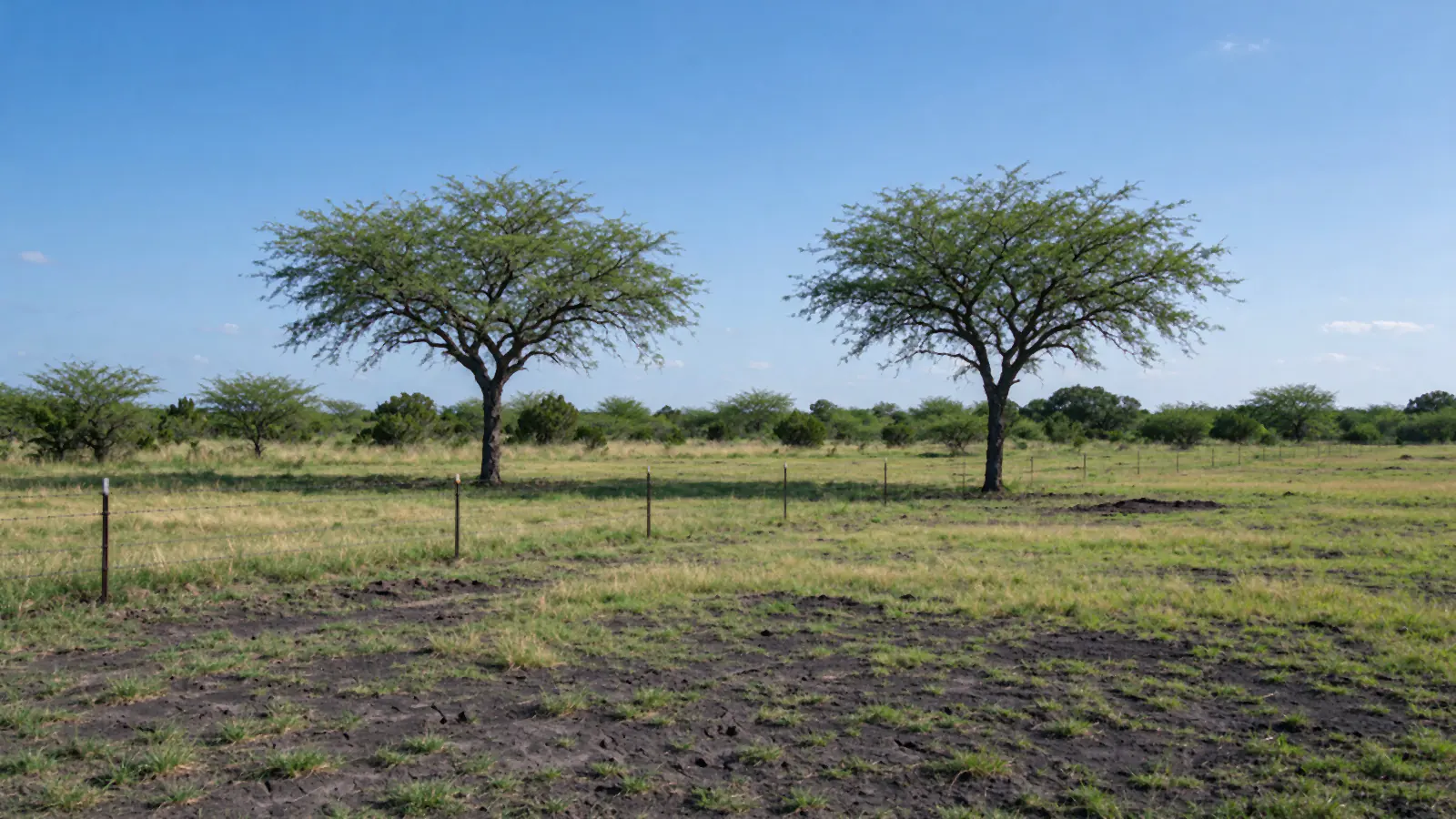
A pasture walk maps the brush rather than counting trees. What is taking over (cedar, mesquite, hackberry, mixed brush), how dense it is in each part of the pasture, where the shade trees and fence lines are, and how much grass is left between the brush. Areas with good grass still underneath recover quickly once the brush is gone; areas shaded bare need reseeding.
The walk also asks about the land’s use and valuation, because clearing for grazing and clearing for a homesite are treated differently for property taxes.
Methods, from lightest to heaviest
- Shredding with a rotary cutter knocks down young brush and weeds. It is cheap and fast, but it is maintenance, not removal. Mesquite cut above its bud zone comes back with more stems.
- Forestry mulching grinds cedar and mixed brush to grade and leaves the chips. It works well on cedar, which does not resprout from a low cut.
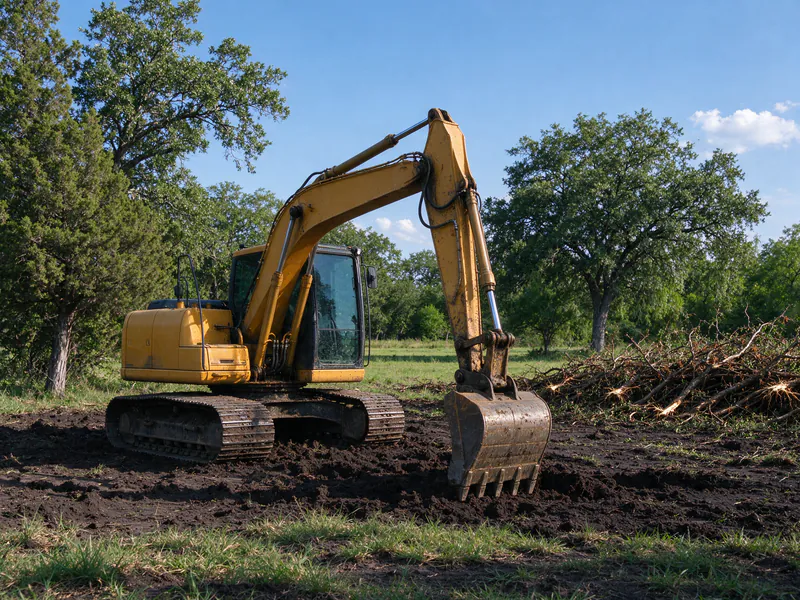
- Grubbing with a dozer or excavator pulls brush out by the roots. It is the way to remove mesquite for good, because it takes the bud zone below the soil line. See mesquite removal.
- Root plowing drags a blade beneath the surface across a whole field, cutting roots below the bud zone. It reclaims heavily infested fields but leaves bare ground that has to be seeded.
Ground and method in Bell County
Heavy clay pastures east of Temple, toward Troy, Holland and Rogers, are where dozer grubbing and root plowing earn their cost: the soil is deep, rock-free and grows mesquite with long taproots. Grubbing clay is easiest when the ground is firm but not cracked hard, which in Bell County usually means late fall through early spring, outside the wettest weeks.
West of the Lampasas River and on the hills toward Killeen, stony soils over limestone limit how deep any machine can work. Mulching is usually the practical choice there, and the brush is more often cedar than mesquite. See cedar clearing.
Want a method per pasture?
Send the acreage and a few photos of the worst areas. The brush type decides the method.
Planning by season
Pasture work in Bell County follows the weather.
- Late fall through early spring: firm clay and dormant brush. The usual window for grubbing and root plowing on the Blackland.
- May and September to October: the wettest months. Clay ruts under tracks, so heavy work is scheduled around rain.
- Late summer: firm ground, but burn bans are most likely, so a plan that depends on burning piles needs a fallback.
- February through June: oaks kept for shade are not wounded, because oak wilt spreads most easily then.
Reseeding works best ahead of reliable rain, so grubbed ground is ideally ready before the fall rains.
Erosion on cleared pasture
Shredding and mulching leave cover on the ground. Grubbing and root plowing do not, and bare clay on a slope can lose soil in a single spring storm. On larger grubbed areas, leaving strips of untouched grass across the slope, working in sections, and seeding quickly all reduce that risk. Creek banks and draws are left with cover wherever possible, because that is where cleared pasture loses soil first. Stock tanks fed by a draw also stay cleaner when the draw keeps its grass. That is cheaper than cleaning silt out of a tank later.
Regional rate context
Texas A&M AgriLife Extension publishes a farm and ranch custom rates survey. Its current edition, for the East region, which includes Bell County, reported:
| Operation | Typical rate (East region) |
|---|---|
| Pasture shredding | $15 to $75 per acre, most commonly $50 |
| Dozer land clearing, under 160 hp | $120 to $250 per hour, average about $159 |
| Dozer land clearing, over 160 hp | $100 to $300 per hour |
| Dozer root plowing, over 160 hp | $150 to $300 per hour |
| Dozer rake and stack, over 160 hp | $150 to $275 per hour |
| Grubbing, about 40 small trees per acre | $125 to $250 per acre |
These are farm-and-ranch rates for comparing quotes, not a price for your pasture. Mulching heavier brush runs about $1,300 to $4,000 an acre in typical Central Texas budgeting ranges. The cost guide explains the difference.
Debris on rural land
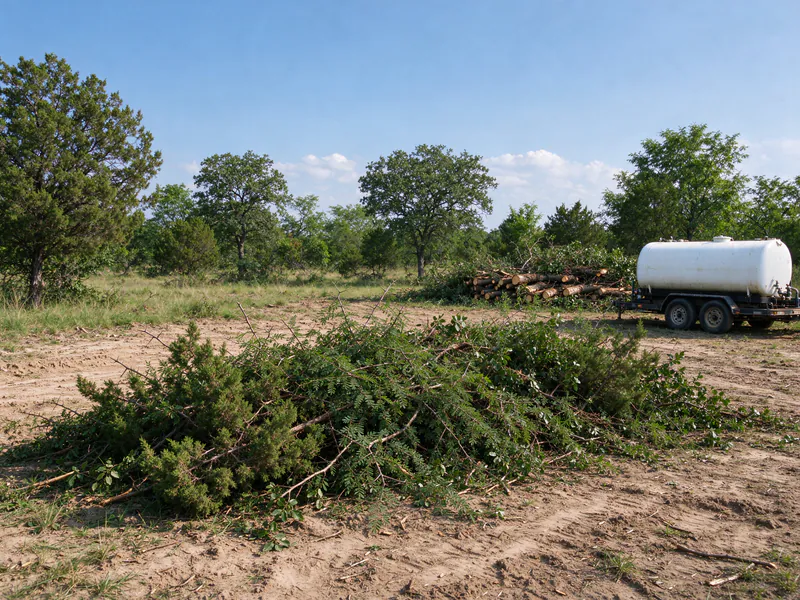
Outside city limits, Bell County follows the state outdoor burning rule, which allows land owners to burn trees and brush cleared from their own property, unless the county judge has a burn ban in place. Only natural vegetation may be burned, and burns are reported to the county burn line. The guide to burning brush covers the conditions. Ash wood stays in the county because of the emerald ash borer quarantine.
Getting grass back
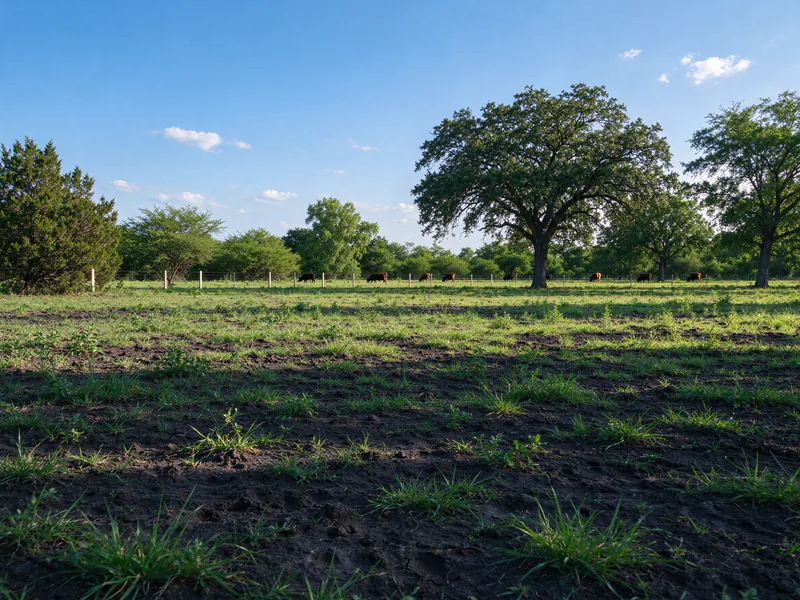
Clearing is half of pasture work. On Blackland clay, both native grasses and improved pasture recover well once shade is gone, but ground bared by grubbing or root plowing needs seed before the next heavy rain, or it washes. Grubbed holes are filled so they do not trip livestock. In the first year, expect sprouts from hardwoods and mesquite and plan a follow-up pass, as the guides on why mesquite comes back and whether brush grows back explain.
USDA NRCS cost-share programs can include brush management; eligibility and payments come from the local NRCS office.
Ag valuation
Clearing brush to improve grazing keeps land in agricultural use. Clearing it for a homesite or another use can be a change of use, and Texas law then charges a rollback tax for the three prior years. The guide to clearing ag land explains what to ask the Bell County Appraisal District before you start.
For a pasture walk, call (254) 269-4999 or send the acreage through the form below.