Last Updated:
Arcady Temple Land Clearing arranges stump removal across Temple and Bell County, with the work done by independent, insured clearing contractors. A stump can be ground down or pulled out. The right choice depends less on the stump than on what goes over that spot next.
What happens on the first visit
Stumps get counted and measured, because diameter and count set most of the price. Then each area gets a decision:
- Lawn, pasture, garden or fence line: grinding is usually enough.
- Slab, driveway, building pad, pond bank or anything carrying weight: the stump and root ball come out.
- Mesquite you never want to see again: grind below the bud zone or extract.
The walk also looks for what is near the stumps: water lines, septic laterals, buried electric to a well, fences and foundations.
Grinding
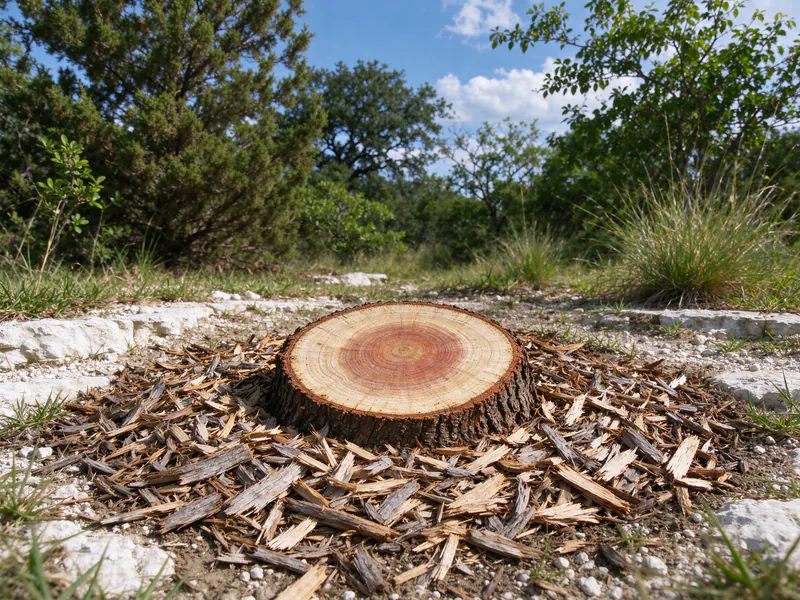
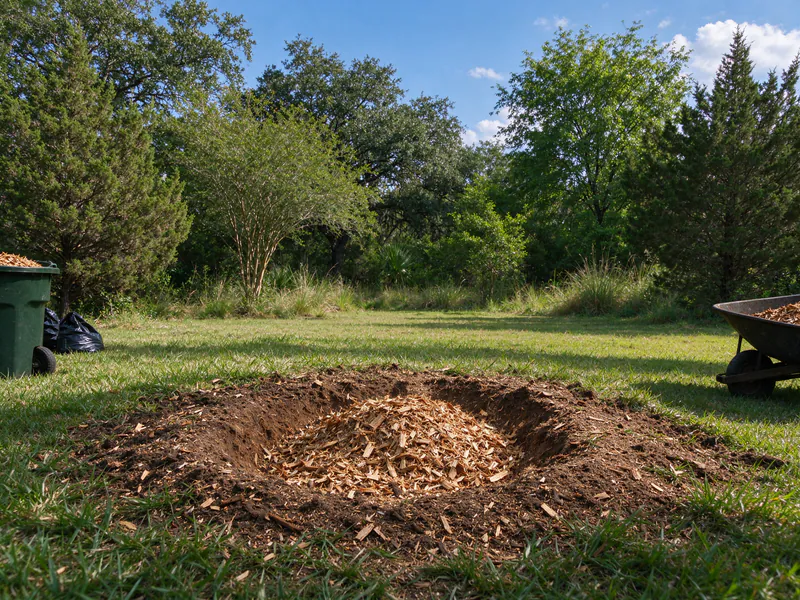
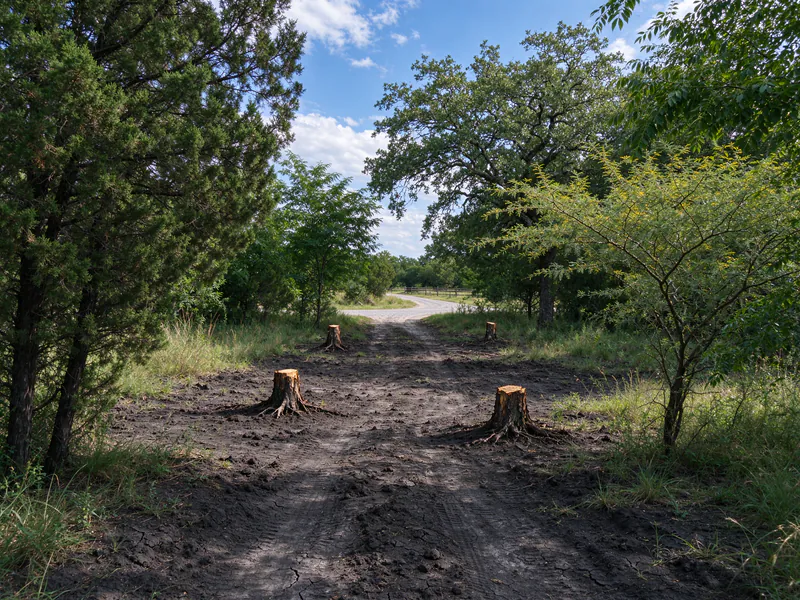
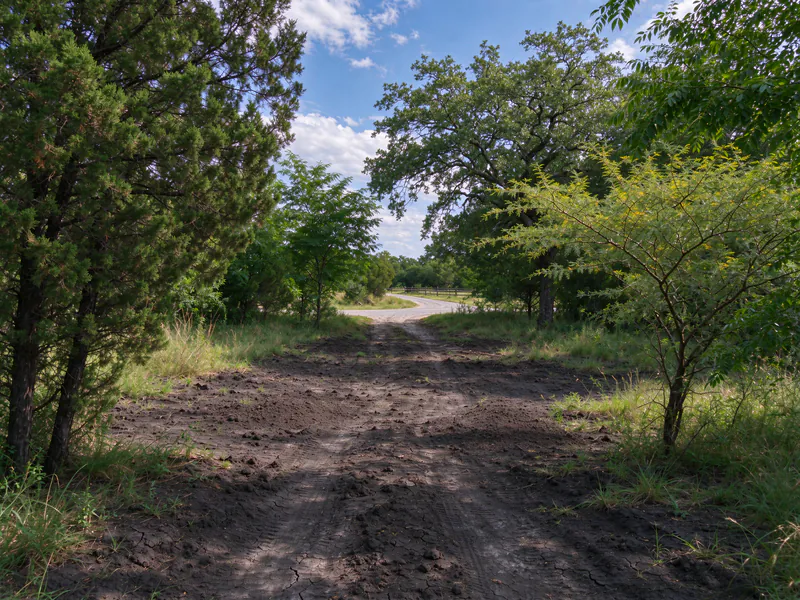
A stump grinder is a toothed wheel that chews the stump down to several inches below grade. The roots stay in the soil and rot slowly over years. Grinding disturbs very little ground, leaves a shallow hole full of chips, and suits places where grass or a garden will go.
Two things are worth knowing. Fresh chips in the hole slow grass, so most owners rake them out and topdress with soil before seeding. And a ground stump area can settle slightly for a year or two as the remaining wood breaks down.
Extraction
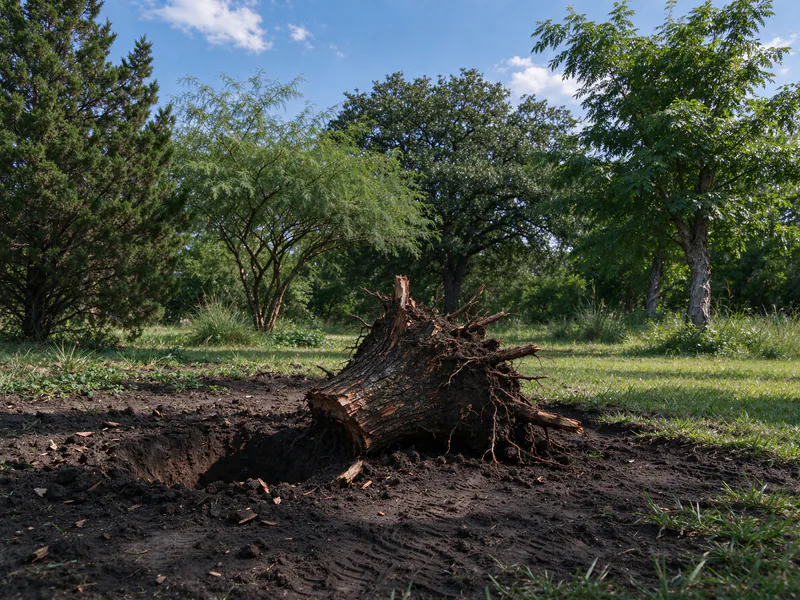
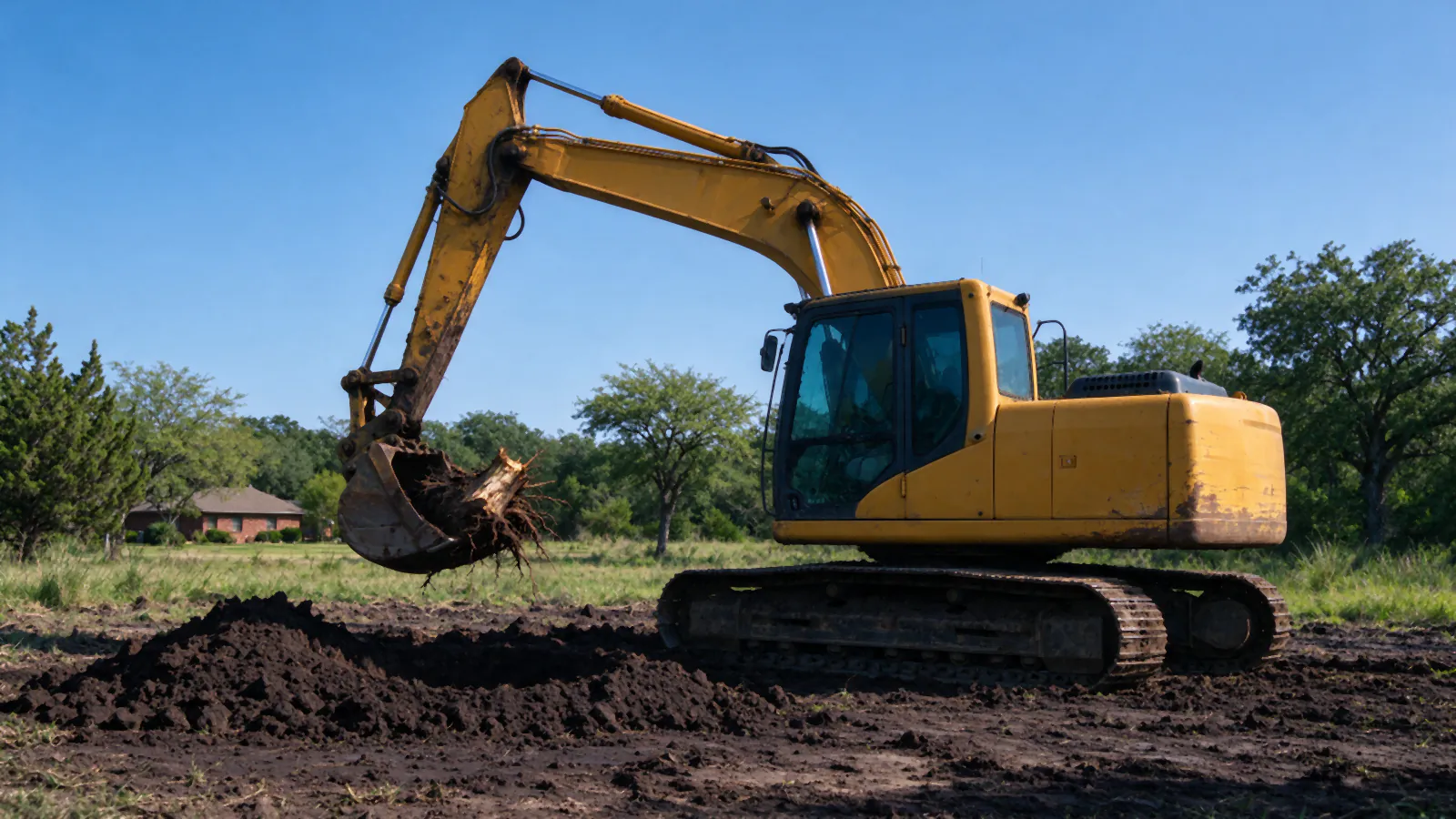
Extraction lifts the stump and its root ball out with an excavator. It is the answer under concrete, because roots left under a slab or driveway rot and leave voids that settle. On Bell County’s shrink-swell clays that settling adds to movement the soil already causes, so builders usually want root balls out of the pad.
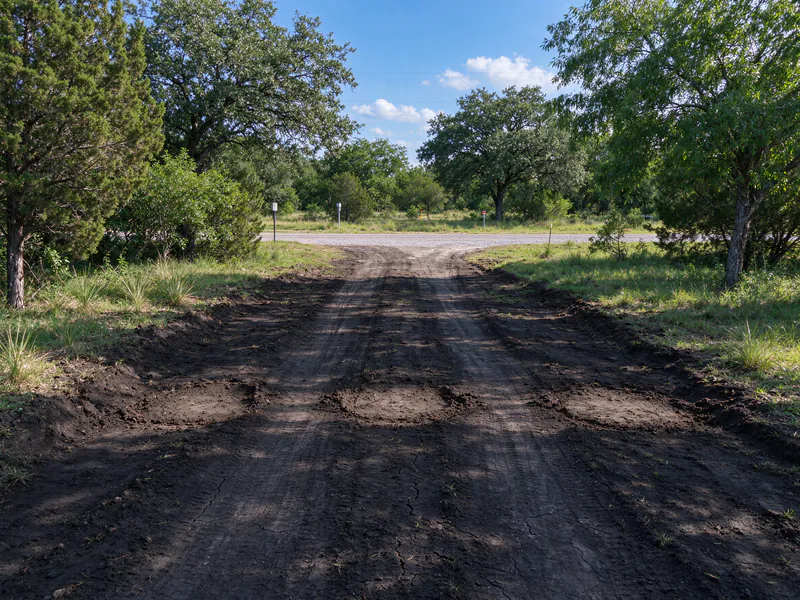
Extraction leaves a hole, which is filled and tamped so it does not hold water. On the deep clays around Temple it is easiest when the ground is firm but not cracked hard. On the limestone west of I-35 the excavator may hit rock before the roots end, and roots wrapped around ledges take longer.
Pad, driveway or lawn?
Tell us what goes over the stumps. That decides grind or pull, and the price follows.
Before anyone digs: the 811 rule
Pulling stumps easily goes past 16 inches deep. Texas law treats mechanized digging to that depth as excavation and requires a call to the Texas811 notification center no earlier than 14 days and no later than 48 hours before work starts, excluding weekends and holidays. On rural lots the usual surprises are private lines the locators do not mark, such as a water line to a barn or electric to a well pump, so the walk-through asks about them.
Mesquite and cedar stumps
Species matters. Ashe juniper (cedar) has no buds on its trunk, so a cedar stump cut low does not resprout and a shallow grind is fine. Mesquite sprouts from buds at and just below the soil line, so a shallow grind often leaves a clump of new stems a season later. Grinding mesquite below the bud zone, or extracting it, is what stops that. The guide on why mesquite comes back explains the bud zone, and mesquite removal covers whole stands.
Stumps left from earlier clearing
Many calls are about stumps someone else left: a lot that was forestry mulched and now needs a driveway, or a tract where trees were cut years ago and the stumps are in the way of a mower. The same rule applies. If the spot will carry weight, extract; if it will be grass, grind. The guide to grinding versus removal walks through the decision.
Large stumps and stumps near buildings
Big stumps from old shade trees left after selective clearing or storms, especially live oaks and pecans, can be several feet across with roots that run under driveways and foundations. Grinding is usually the safer choice near a house, because pulling a large root ball can lift paving or disturb soil under a slab. Where a large stump sits where something must be built, the walk-through decides how far to dig and whether the builder or an engineer should weigh in first.
Stumps left from storm-felled trees are another common call. They are often split and uneven, with roots partly torn out, and they may be easier to extract than to grind.
What happens to the chips and root balls
Grinding leaves chips that can stay as mulch, be raked out and used elsewhere, or be hauled. Extracted stumps and root balls carry a lot of soil and are heavy to haul, so on rural land they are often mulched or piled on site where that is allowed, and on residential lots they go to the landfill. The Bell County rules guide covers where debris may go by address.
Grinding or pulling in stages
On homesites, stumps are often handled in two passes. Stumps under the future pad and driveway are pulled during clearing so the dirt contractor starts with clean ground. Stumps in the yard are left until construction is done, then ground and seeded, so heavy trucks do not tear up a finished lawn. Planning both passes at the start avoids paying for a machine twice when one visit would do. The estimate should list which stumps fall in each pass. That way nothing is missed.
What stump removal costs
Grinding is priced by stump diameter and count, and extraction by machine time, root ball size and backfill. No Bell County-specific stump price was available for this page, so the drivers matter more than any single figure: diameter, species, how many, access for the machine, rock, and whether chips and root balls are hauled. For a public point of comparison, a recent Bell County TxDOT contract paid low bids of $170 to $200 each to remove trees up to 24 inches across, at highway scale. The land clearing cost guide covers how those parts add up, and lot clearing covers stumps as part of a homesite.
For a stump count and plan, call (254) 269-4999 or send photos through the form below.