
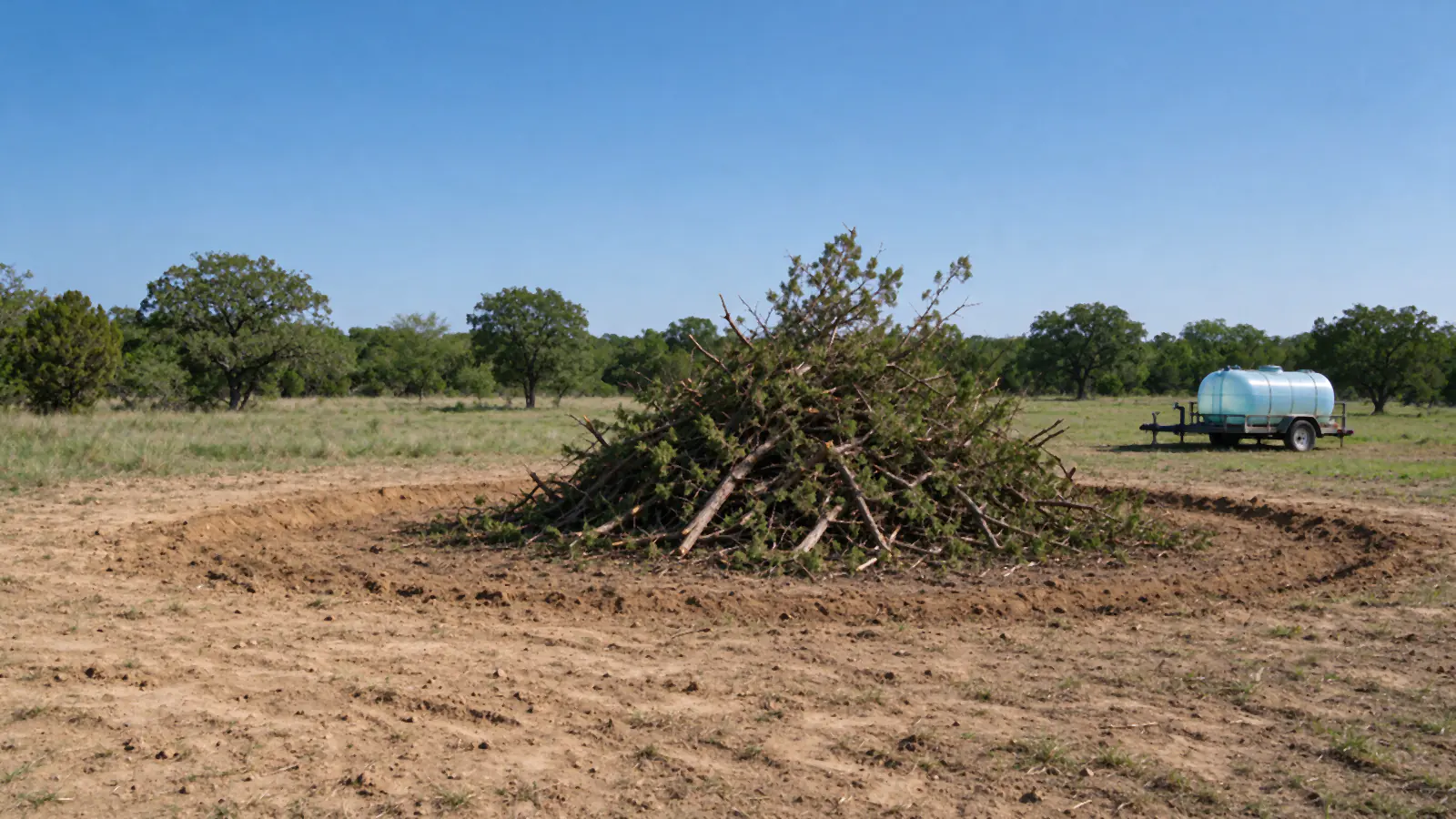
Short answer: inside Temple, almost never; inside Belton and Salado, only by permit; in unincorporated Bell County, yes, for brush and trees from your own land, unless the county judge has a burn ban in place. Whatever the address, the pile can hold plant material only. Mulching and hauling avoid the question.
Arcady Temple Land Clearing checks the burn rule for every address before a job is planned, because it decides whether debris is mulched, hauled or burned.
The rule by jurisdiction
| Where | Can you burn land-clearing brush? | What it takes |
|---|---|---|
| Temple city limits | Only when no practical alternative exists | A permit from the Temple Fire Marshal first |
| Belton city limits | Yes, by permit | $100 residential or $300 commercial, plus an inspection |
| Village of Salado | Yes, by permit | Village permit with pile size, setback, wind and time limits |
| Unincorporated Bell County | Yes, from your own property | No county ban in place; natural vegetation only |
Temple
Temple is the strictest of the four. Its outdoor burning ordinance covers brush, limbs, whole trees and leaves, and a homeowner with a yard full of trimmings cannot light a pile. The one opening is for clearing work: a burn of plant growth on the site where it was cleared, when hauling or chipping is not a realistic option, after the Fire Marshal has signed off. In practice most clearing inside Temple ends with the debris mulched or trucked out. A backyard fire pit is not a loophole either; yard waste cannot go into it. Tree services working in town have their own rule: they register with the city and take their cuttings to the landfill or another approved site.
Belton
The City of Belton requires an open burn permit at all times for burning in the city, $100 for residential and $300 for commercial, paid at Fire Station 2 on Sparta Road. The Fire Marshal then inspects the burn area before any burn takes place. More on the Belton page.
Salado
Salado allows burning of debris from undeveloped land being cleared, storm damage and fallen limbs, but the permit comes with a checklist that shapes the whole job. Piles have to stay small, so a big clearing means many burn days. Each pile needs a bare ring around it and a long gap from any neighbor’s building, which rules out burning on most small village lots. Wind has to be moving, but not too hard, and burning stops at dark. The exact numbers are on the Salado page; confirm the current process with the village before planning around a burn.
Unincorporated Bell County
Outside city limits, a landowner can burn brush and trees cleared from the same property, because Bell County meets federal air quality standards and the state’s outdoor burning rule allows land-clearing burns in counties like it. Two limits still apply. Only plant material goes on the pile: no tires, plastic, rubber, lumber or treated posts, which the county fire marshal treats as a criminal offense. And nothing burns while a county ban is in effect. Call the county burn line, 254-933-5555, before lighting. More on the rural Bell County page, and the full rule citations are in the Bell County rules guide.
How burn bans work
The Bell County judge can ban outdoor burning in unincorporated areas when conditions are dangerous, and the commissioners court can extend a ban. A ban began in August 2026 and another that September; the September order was lifted on October 1 after rain. Bans are most likely in the hot, dry weeks of late summer and early fall, so a clearing plan that depends on burning should have a fallback. Belton’s fire department notes that county bans apply outside the city, not inside it.
Want the brush gone without burning?
Mulching leaves it on the ground as cover; hauling takes it away. Send photos and the address.
If you do burn: safe pile burning
Texas A&M AgriLife Extension’s guide to on-site brush pile burning recommends:
- checking that the burn is allowed and that no ban is in place, and notifying the fire department and dispatch;
- building piles of a manageable size with a clear line free of fuel around them, and nothing above them;
- burning only when the forecast allows safe burning and good smoke dispersal;
- keeping water and tools on hand and never leaving an active pile unattended;
- making sure everything is burned completely or cold before leaving, because large logs can smolder for weeks.
Alternatives to burning
- Mulch in place. Forestry mulching grinds brush and leaves it as ground cover. No permit, no ban, no haul.
- Chip and spread. Smaller amounts can be chipped and spread or used around the property.
- Haul. The Temple Landfill on Loop 363 takes loads for a per-load minimum for non-residents, plus a state fee; loads must be tarped. The cost guide shows how hauling adds up.
Ash wood stays in the county either way, because of the emerald ash borer quarantine.
Which choice is cheapest
Burning looks free but often is not: permits, waiting for a burn day, a crew to watch the fire, and the risk of a ban stalling the job. Hauling adds trucking and landfill fees. Mulching usually costs least overall on residential lots and much rural work, because the debris never leaves the ground. The mulching versus grubbing guide explains when mulching is not enough, and the Bell County rules guide covers the other permits that can apply.
To plan around the burn rules for your address, call (254) 269-4999 or send the details below.