
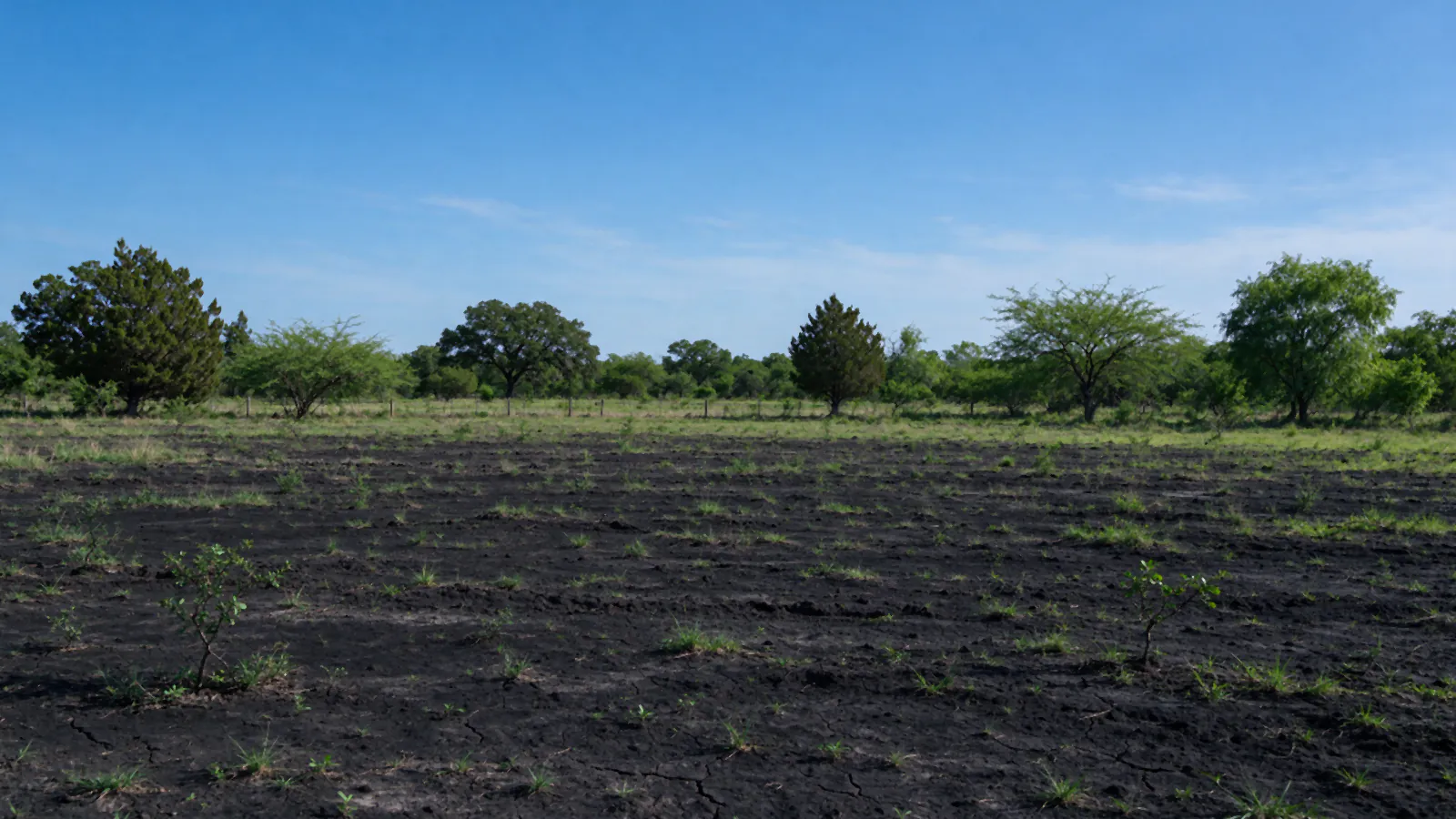
Short answer: cedar does not grow back from a low cut, but mesquite, hackberry, elm and many other hardwoods resprout from their stumps or roots, and seedlings of all of them arrive from seed once sunlight reaches the soil. Mowing or treating sprouts in the first growing season, and getting grass established, keeps cleared land open.
Arcady Temple Land Clearing explains regrowth on every estimate, because what comes back decides what the follow-up costs.
Why some trees come back and others do not
Whether a tree resprouts depends on where its buds are.
Ashe juniper (cedar) has no buds on its trunk. It grows only from its green limbs, so a cut below the lowest one leaves nothing that can sprout, and the stump dies. That is why cedar clearing by mulching stays done.
Honey mesquite keeps a ring of buds at and just below the soil line, the bud zone. Any cut above it, from a shredder, a mulcher or a chainsaw, leaves the buds alive, and each cut wakes several of them. One trunk becomes a clump of stems. The guide on why mesquite comes back explains the bud zone in detail.
Hackberry, elm, oaks and most other hardwoods sprout from dormant buds on the stump and along the roots after they are cut. Sprouts are vigorous for a season or two, then slow down if they are cut again.
Redberry juniper, a different species, behaves differently from Ashe juniper: it resprouts unless cut below the bud zone near ground level.
Species by species
| Plant | Comes back from the stump? | What stops it |
|---|---|---|
| Ashe juniper (cedar) | No, if cut below the lowest green limb | Nothing needed; watch for seedlings |
| Honey mesquite | Yes, from the bud zone | Grubbing about 14 inches deep, or treatment by a licensed applicator |
| Hackberry, elm | Yes, from stump and roots | Repeated mowing; grubbing where it matters |
| Oaks | Yes | Usually kept on purpose |
| Seedlings of all of these | From seed in the soil and from birds | Grass cover and early mowing |
Where seedlings come from
Even species that do not resprout come back from seed. Cedar and hackberry berries are spread by birds, so seedlings show up thickest along fences, under power lines and beneath any tree birds perch in. Mesquite pods are eaten and spread by livestock and wildlife. Seed already in the soil sprouts when clearing lets sunlight reach it. That is why fence lines fill in faster than open pasture, as the guide on how wide to clear a fence line notes.
Cleared land already closing in?
A light follow-up pass costs far less than clearing again. Send photos of what is coming back.
Method matters
How the land was cleared changes what returns.
- Shredding or mowing leaves stumps and buds, so hardwoods and mesquite come back quickly.
- Forestry mulching kills cedar and leaves a mulch layer that slows seedlings, but hardwoods and mesquite still sprout.
- Grubbing removes stumps and roots, so little resprouts, but the bare soil invites seedlings unless grass is seeded.
The mulching versus grubbing guide compares the two methods for different end uses.
Keeping cleared land open
- Get grass growing fast. Thick grass is the strongest defense against seedlings. Overseed bare spots ahead of the fall rains.
- Mow early. A few passes in the first growing season while sprouts are soft.
- Grub or treat persistent mesquite. Mowing alone will not stop it.
- Cut cedar seedlings while small. At knee height they come out with hand tools.
- Check every few years. A light pass is cheap; letting it go means clearing again.
Around oaks you kept, do this follow-up work outside February through June, or take extra care not to wound the trees, as the oak wilt guide explains. The first season is covered month by month in what to do after forestry mulching.
What it means for a budget
Plan for follow-up as part of the job, not a surprise. On cedar ground, it may be a pass every few years for seedlings. On mesquite pasture that was mulched rather than grubbed, it may be a treatment or mowing program for a few seasons. A good estimate says which, as the estimate checklist explains.
To talk through regrowth on your land, call (254) 269-4999 or send photos below.