
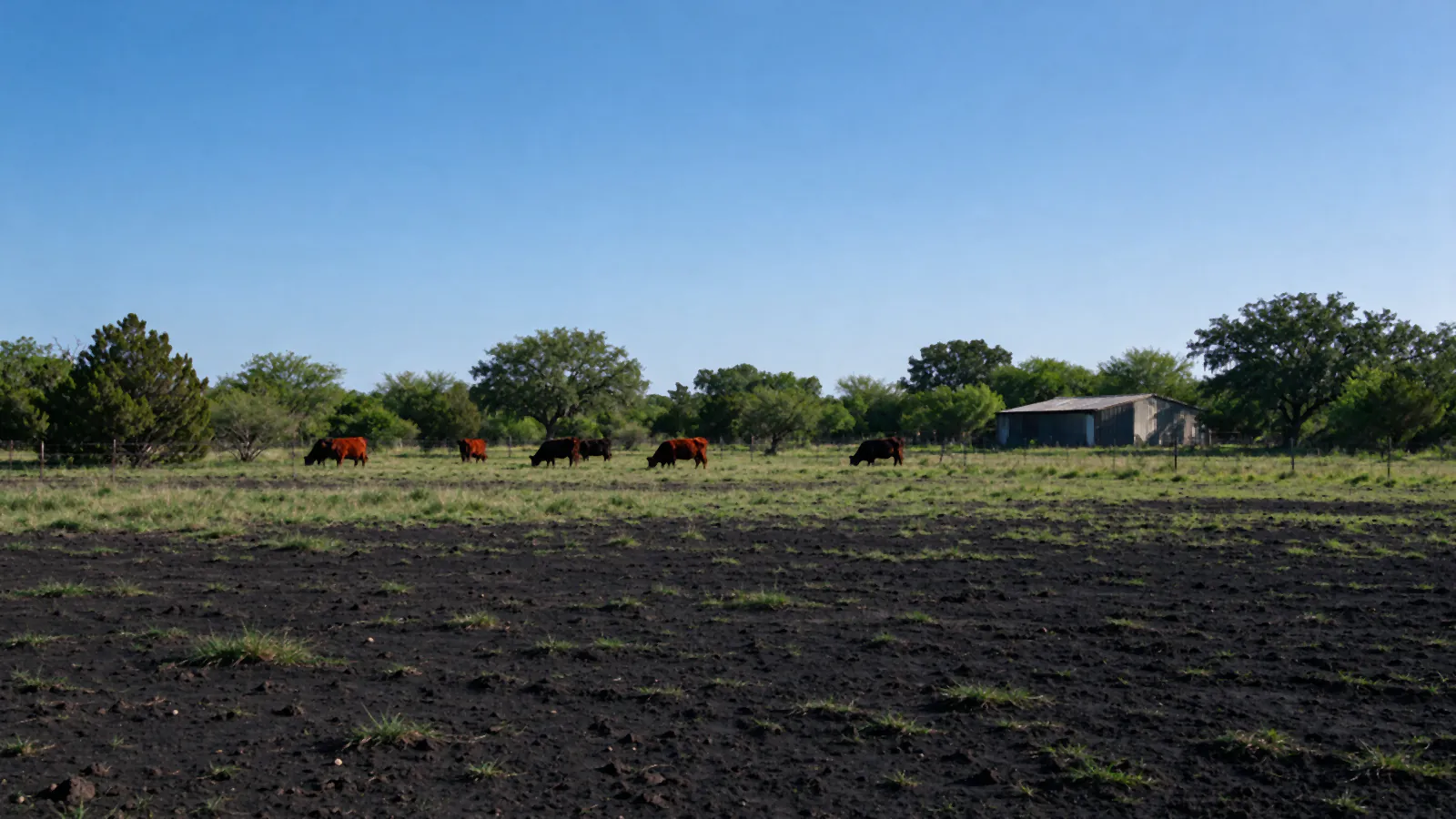
Short answer: clearing brush to improve grazing or farming is consistent with agricultural use and does not, by itself, cost you an ag valuation. Clearing land to build a house, a shop or another non-agricultural use can be a change of use, and Texas law then charges an additional “rollback” tax for the three previous years. Ask the Bell County Appraisal District before you start.
Arcady Temple Land Clearing clears pasture and acreage across Bell County, and the question of use comes up on almost every rural job, so it is worth settling first.
What an ag valuation is
Much of rural Bell County is appraised as open-space agricultural land, often called “ag exempt,” though it is a special valuation rather than an exemption. The land is taxed on its productive agricultural value rather than its market value, which is usually much lower. The valuation depends on the land being used for agriculture, such as grazing or crops, to the degree typical in the area.
Clearing that keeps agricultural use
Clearing brush to bring pasture back is ordinary ranch work. Removing mesquite and cedar so grass can grow, opening fence lines so they can be maintained, and clearing for stock tanks and pens all support agricultural use. Pasture clearing covers the methods, and USDA NRCS cost-share programs for brush management exist for that kind of work, with eligibility set by the local NRCS office.
Clearing that can change the use
Clearing part of an ag-valued tract to build a house, a barndominium, a shop or a commercial site is different. The land under and around the new use is no longer in agriculture. Under Texas Tax Code section 23.55, when land appraised as open-space agricultural land changes use, an additional tax is imposed equal to the difference between the taxes paid and the taxes at market value for each of the three previous years it was appraised that way.
How much land the change covers, whether the rest of the tract keeps its valuation, and when the change is counted are questions for the appraisal district, not for a clearing contractor.
Why brush management is ranch work
Mesquite and cedar compete with grass for the same water and light. A pasture that has thickened into brush carries fewer cattle, because there is less forage under the canopy and stock cannot reach what grows in the thickets. Clearing that brush and letting grass return restores the grazing the valuation is based on, which is why it fits agricultural use. The same logic explains the opposite case: clearing that ends in a slab, a yard or a parking area produces no forage at all.
Clearing part of an ag tract for a homesite?
Talk to the appraisal district first, then send us the site plan.
Questions to ask the appraisal district
- Does the work I plan count as continued agricultural use?
- If I build on part of the tract, how much land changes use, and does the rest keep its valuation?
- When would a rollback be calculated, and roughly how much would it be?
- What records should I keep to show continued agricultural use on the rest?
Ask before clearing, not after, and keep the answer in writing.
Records worth keeping
- Dates and areas of clearing, with photos before and after.
- Grazing leases, livestock numbers or crop records.
- Receipts for brush management, fencing and pasture work.
Burning and debris on ag land
Outside city limits, state rules allow land owners to burn brush cleared from their own property unless the county has a burn ban in place. See burning brush in Bell County. Ash wood stays in the county under the emerald ash borer quarantine.
Planning the work
On ag land, the usual plan is to improve grazing first and decide on any homesite separately, so the two are not confused on paper. For mesquite pasture, the guide on why mesquite comes back explains grubbing depth, and whether brush grows back covers follow-up. The Bell County rules guide lists the other rules that can apply, and the cost guide includes AgriLife’s farm and ranch rates for comparison.
This guide is general information, not tax advice. For your tract, the appraisal district and a tax professional have the final word.
For pasture clearing on ag land, call (254) 269-4999 or send the details below.