Last Updated:
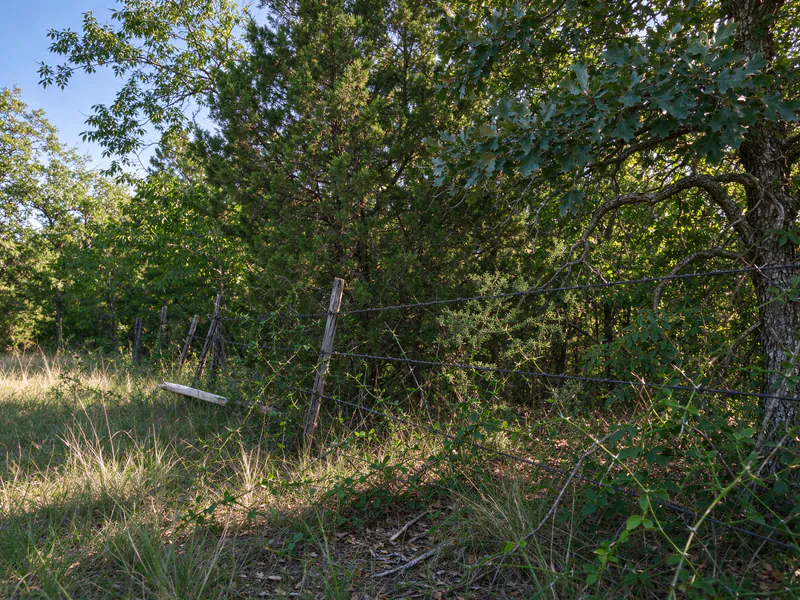
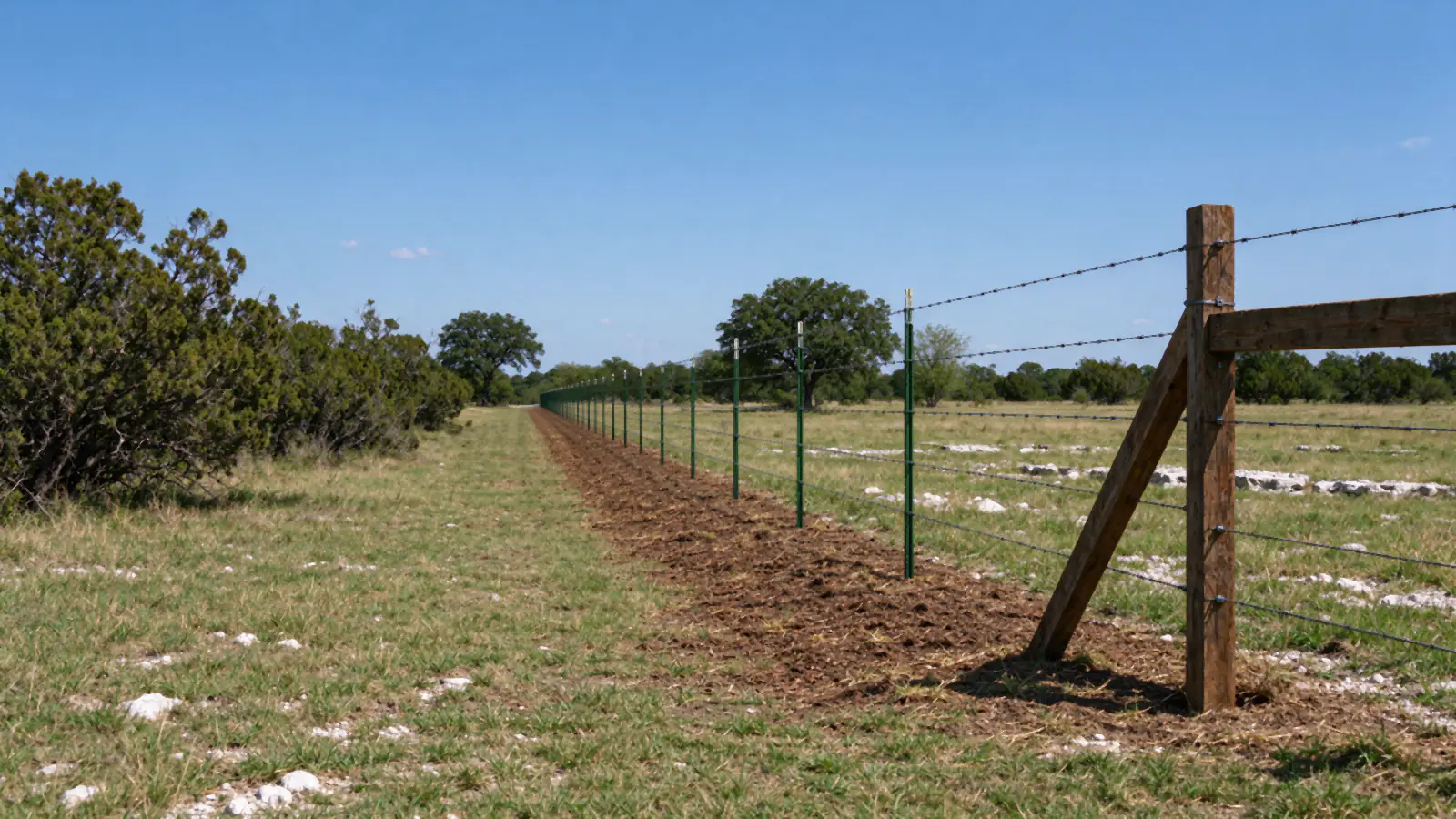
Arcady Temple Land Clearing arranges fence line clearing across Temple and Bell County, with the work done by independent, insured clearing contractors. Fence lines grow up in cedar, hackberry, mesquite and vines because mowers cannot reach them. Clearing a strip so a new fence can go in, or so an old one can be found and repaired, is narrow, linear work with its own problems: hidden wire, boundaries and neighbors.
What happens on the first visit
Three things are checked before anything is cut.
- Where the line actually is. Survey pins, the plat, or the existing fence. On older rural tracts the old fence is not always on the boundary, and that matters before clearing toward a neighbor.
- What is buried in the brush. Old barbed wire, T-posts, staples and fallen fence wreck mulcher teeth and tangle cutters, so they are pulled or flagged first.
- What comes next. A new fence, a rebuild, a mowing strip or a driveway. The next job sets the width.
Width: what follows decides it
Width depends on what has to fit in the strip.
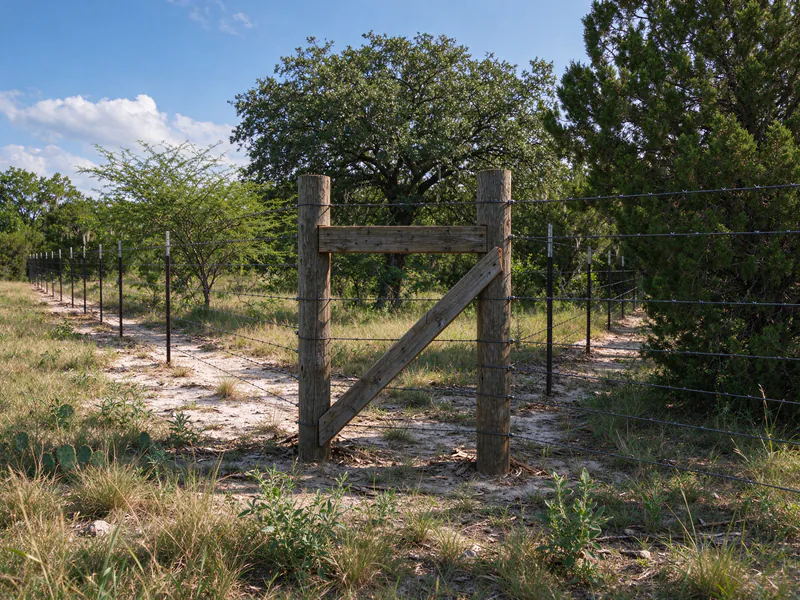
- New fence: room for a post driver or auger, a truck with materials, and a mowing strip on each side so it stays open.
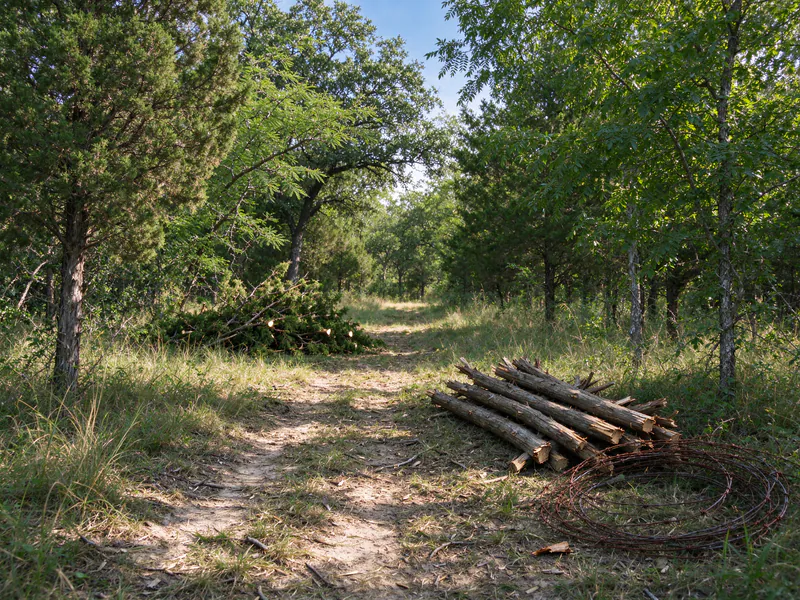
- Rebuilding old fence: room to pull and roll the old wire and set new posts on the same line.
- Keeping a line open: a strip a mower can run along every year.
Clearing too narrow is the common mistake. Brush leans back in from the edges within a season. The guide on how wide to clear a fence line covers typical widths.
Know your fence length?
Send it with the fence type and a few photos of the worst stretch.
Driveways, trails and easements
The same work clears other linear corridors.
- Driveway corridors are cleared to lane width plus shoulders and room for trucks. If the drive will get a base or concrete, the stumps and roots under it come out, as covered under stump removal.
- Ranch roads and trails are cleared to mower or vehicle width, with attention to slope, because a bare track down a hill becomes a gully.
- Utility easements have rules set by the utility; work under or near power lines follows them.
What grows back along a fence
Fence lines are where birds drop seed, so they fill in faster than open ground. Cedar cut below its lowest green limb does not resprout, but mesquite and hackberry do, and seedlings follow. A mowing strip on each side of a new fence is what keeps cedar and vines from climbing back in. The guide on whether brush grows back after clearing explains which species return.
Debris along a fence line
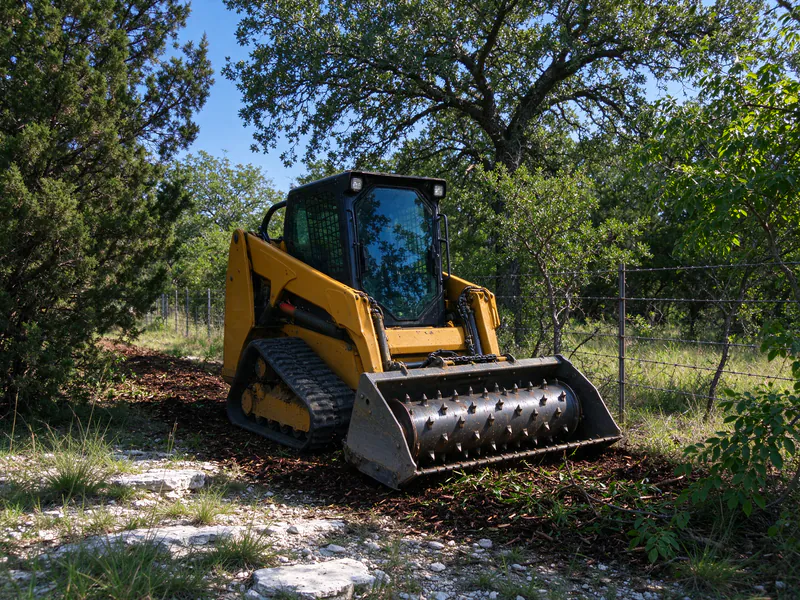
Along a fence line, debris is usually mulched and spread along the strip, which avoids hauling long distances across a property. Where the strip runs along a road or a neighbor’s yard, it may be hauled instead. Burning rules depend on the address: inside Temple and Belton, burning needs a permit; in the county, it is allowed only when no burn ban is on.
Fence lines in pasture work
On ranches, fence lines are often cleared as part of pasture clearing, so the fence crew can rebuild while the pasture is opened up. Doing both at once saves a second trip with the machine. On cedar-heavy ground west of Belton, fence line work and cedar clearing often go together.
Boundaries and neighbors
Fence lines sit on boundaries, so clearing one can affect a neighbor. On older rural tracts, the existing fence is not always on the surveyed line; it may follow a creek, an old road or wherever the original builder found it easiest. Before clearing for a new fence, it is worth knowing where the pins are. If the pins cannot be found, a surveyor can set them, and that cost is small next to building a fence in the wrong place.
Where the line is clear and the work stays on your side, no agreement is needed. Where brush on the neighbor’s side has to come out too, or the fence will be shared, agree with the neighbor first, ideally in writing.
Clearing for different kinds of fence
The fence type changes the strip. Barbed and net wire fences on T-posts need room to stretch wire in a straight line, so the strip has to be straight and clear of stumps that would snag the wire. Pipe and welded fences need room for a welder’s truck along the line. Privacy and wood fences near houses usually need a narrower, cleaner strip, cut by hand near structures.
Timing a fence project
Clearing usually comes a few days before the fence crew, so posts go straight into cleared ground before anything resprouts. On clay, a strip cleared just before a wet spell can turn to mud under the fence crew’s trucks, so the schedule follows the forecast. Where the line crosses a draw or creek crossing, plan how water will pass the new fence before the strip is cut. A water gap is easier to plan before clearing than after.
How fence line work is priced
Fence line jobs are priced by length and width rather than acres, with density and hidden wire as the big variables. A long, straight rural line with open approaches goes quickly. A short suburban fence with sheds, trees and a neighbor’s yard on both sides is slower per foot. Where the machine has to come out for a short job, the day-rate floor applies, roughly $3,000 to $4,000 for typical Central Texas work. The cost guide and how long it takes to clear an acre explain the parts, and the estimate checklist shows what a fence line quote should list.
Where a neighbor’s side needs work too, both owners should agree before anything is cut. For new fence going in a few days after clearing, the strip is left level enough for the post driver or auger to work.
For a fence line, call (254) 269-4999 or send the details through the form below.