Last Updated:
Arcady Temple Land Clearing clears construction sites across Temple and Bell County for builders, developers and owners, with the work done by independent, insured clearing contractors. On a construction site, clearing is the first line item on a schedule that engineers, inspectors and every following trade depend on. The work follows the approved plan, and the stormwater controls go in with it.
What happens on the first visit
The first meeting is about documents as much as ground. To price and schedule a site, the clearing contractor needs:
- The approved site plan with limits of clearing, building and pavement areas, and any trees to save.
- The tree survey and preservation plan, if one was required. Inside Temple’s I-35 corridor overlay, trees over 8 inches in diameter within the floodplain and 300 feet of it need a sealed survey and are replaced or paid for at $100 per caliper inch.
- The stormwater plan and the name of the permit holder.
- Haul routes, staging and the start date the next trade is counting on.
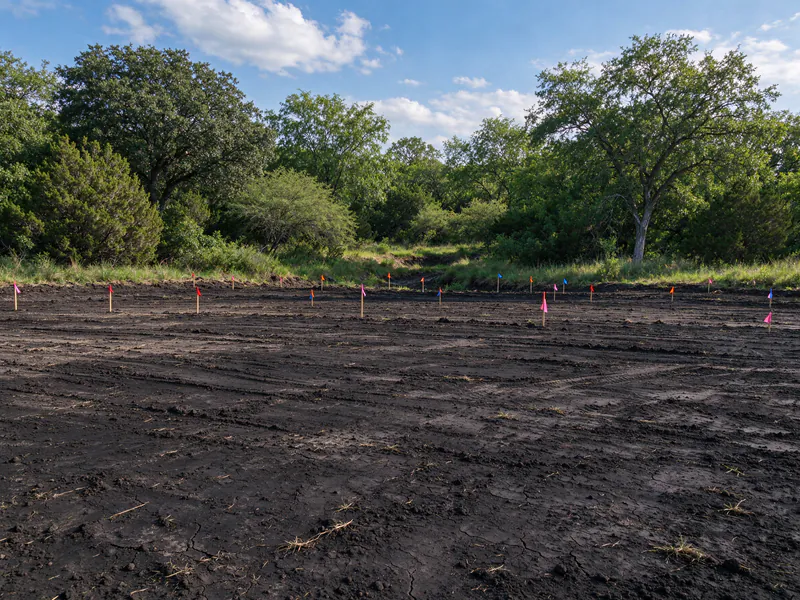
Then the site walk confirms the plan against the ground: where rock is shallow, where water collects, what fence, debris or old foundations are hidden in the brush.
Clear and grub to the plan
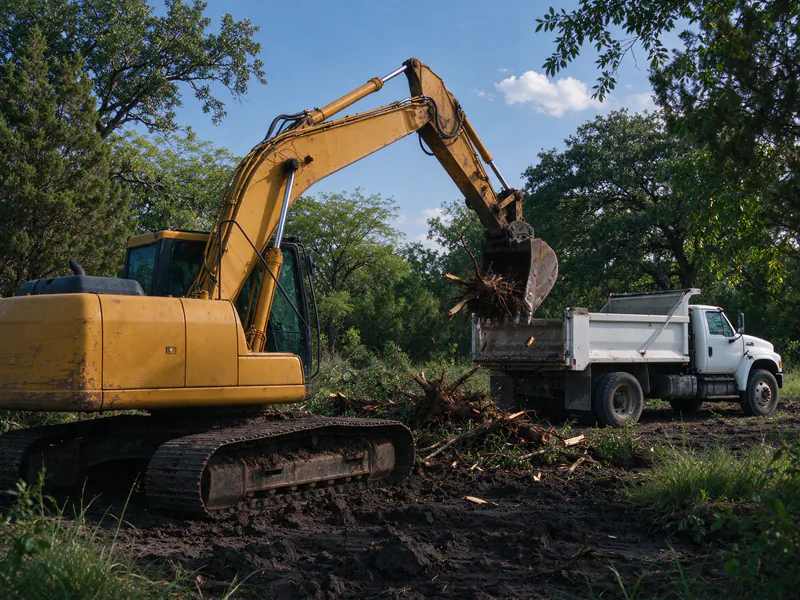
Clearing removes trees and vegetation within the limits. Grubbing removes stumps, roots and buried organic matter from structural areas: building pads, pavement, utility trenches and anything else that will carry load. The two are often written together as “clear and grub,” but they are different scopes, and a good estimate says exactly where each applies.
Trees marked to save get protection fencing before any machine moves, and machines stay outside it. Topsoil is stripped and stockpiled where the plan calls for it. Debris is mulched where it can stay, hauled where it cannot, and burned only where the address allows it. Stumps are pulled with root balls, as covered under stump removal.
Stormwater comes with the clearing
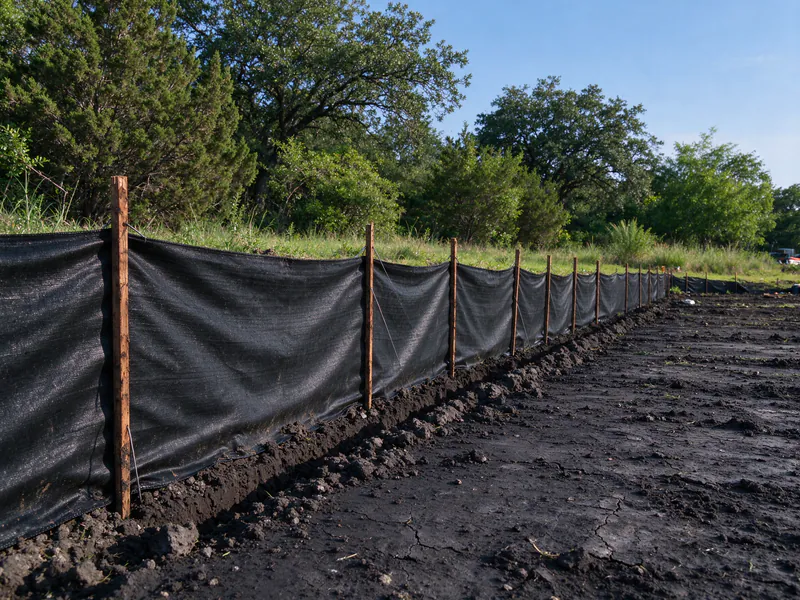
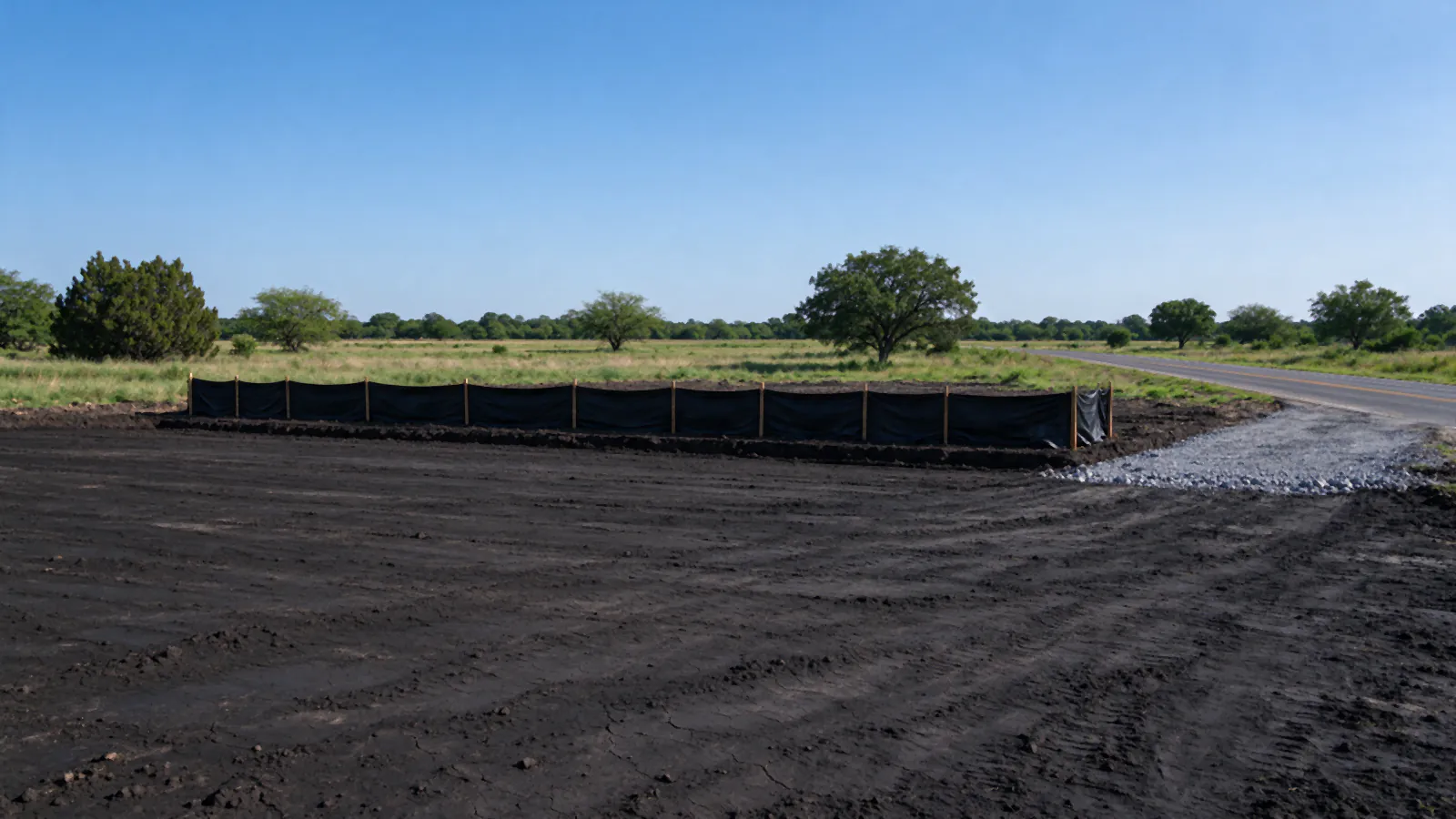
When clearing starts a construction project that disturbs an acre or more, or is part of a larger common plan that will, the Texas Commission on Environmental Quality’s Construction General Permit applies. It requires a stormwater pollution prevention plan, and in practice that means silt fence and other controls before or as the ground opens, maintained until the site is stabilized. Large sites of 5 acres or more file a notice of intent.
Bell County’s clay sheds sediment fast once vegetation is gone. Its wettest months are May and September through October, when a spring or fall storm on a freshly grubbed site can wash soil into the street and the nearest creek. The guide on erosion control after clearing covers what has to stay in place and for how long.
Need clearing and silt fence on the same schedule?
Send the plan and the stormwater plan. Clearing and erosion control can be sequenced together.
Debris and haul routes
Commercial sites produce more debris than residential lots, and where it goes is a cost decision.
- Mulch on site where the plan allows organic material to stay, such as landscape buffers and detention areas.
- Haul to the landfill. The Temple Landfill, operated by Waste Management under a lease with the city, sits at the end of East Avenue H east of Loop 363. Non-residents pay a minimum of $58.24 plus a $0.94 state fee per load, and every load must be tarped.
- Burn only where the address allows: outside city limits when no county ban is on, inside Belton with a $300 commercial permit and inspection, inside Temple only with a Fire Marshal permit when no practical alternative exists.
Ash wood stays in Bell County because of the emerald ash borer quarantine.
Subdivisions and larger tracts
Larger tracts are often cleared in phases to match the stormwater plan, with roads and utilities first and lots later. Phasing keeps less soil bare at once, which is cheaper to protect. Clearing for a road or utility corridor is priced by length and width rather than acreage. For residential builders working lot by lot, lot clearing covers the single-lot version of the same work.
Sequencing with the other trades
Clearing sets the pace for everything after it, so the order matters.
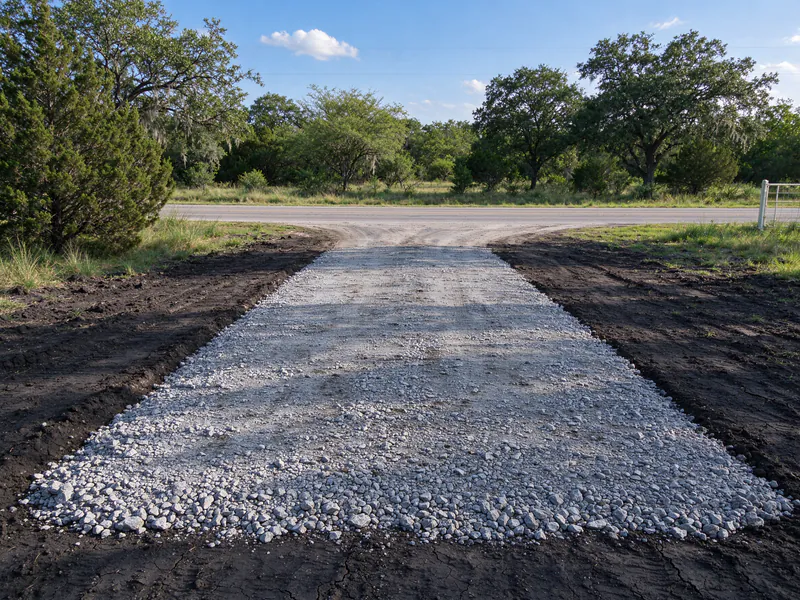
- Stormwater controls and the construction entrance go in first, or as the first ground opens.
- Tree protection fencing goes up around trees to save.
- Clearing within the limits, then grubbing of structural areas.
- Topsoil stripping and stockpiling, where the plan calls for it.
- Handoff to the earthwork contractor for cut, fill and compaction.
On larger tracts, phasing the clearing to match the grading schedule keeps less ground bare at once. Less bare ground means less silt fence to maintain and less sediment to clean up after a storm.
Documentation on commercial work
Commercial clients often need records: dates of clearing, areas cleared, trees removed and protected, haul tickets from the landfill, and photos of controls in place. Agree what is needed before work starts, so it is collected as the job runs rather than reconstructed later. Landfill tickets, in particular, are easy to keep at the time and hard to find afterward. The same goes for photos of tree protection and silt fence on the day they go in.
What site clearing costs
Large sites are priced by area and production rate; small commercial pads still carry a mobilization floor of about one machine day. Typical Central Texas budgeting ranges run about $3,000 to $8,500 or more an acre for clear, grub and haul. For public comparison, recent TxDOT contracts in Bell County paid $1,000 to $1,750 an acre for brush removal at highway scale and $230 to $2,100 per 100-foot station for preparing right-of-way. The Bell County rules guide lists the permits that can apply, the cost guide lists what sits inside a price, and how long it takes to clear an acre explains how production rates turn into schedule.
For a site plan review, call (254) 269-4999 or send the documents through the form below.