
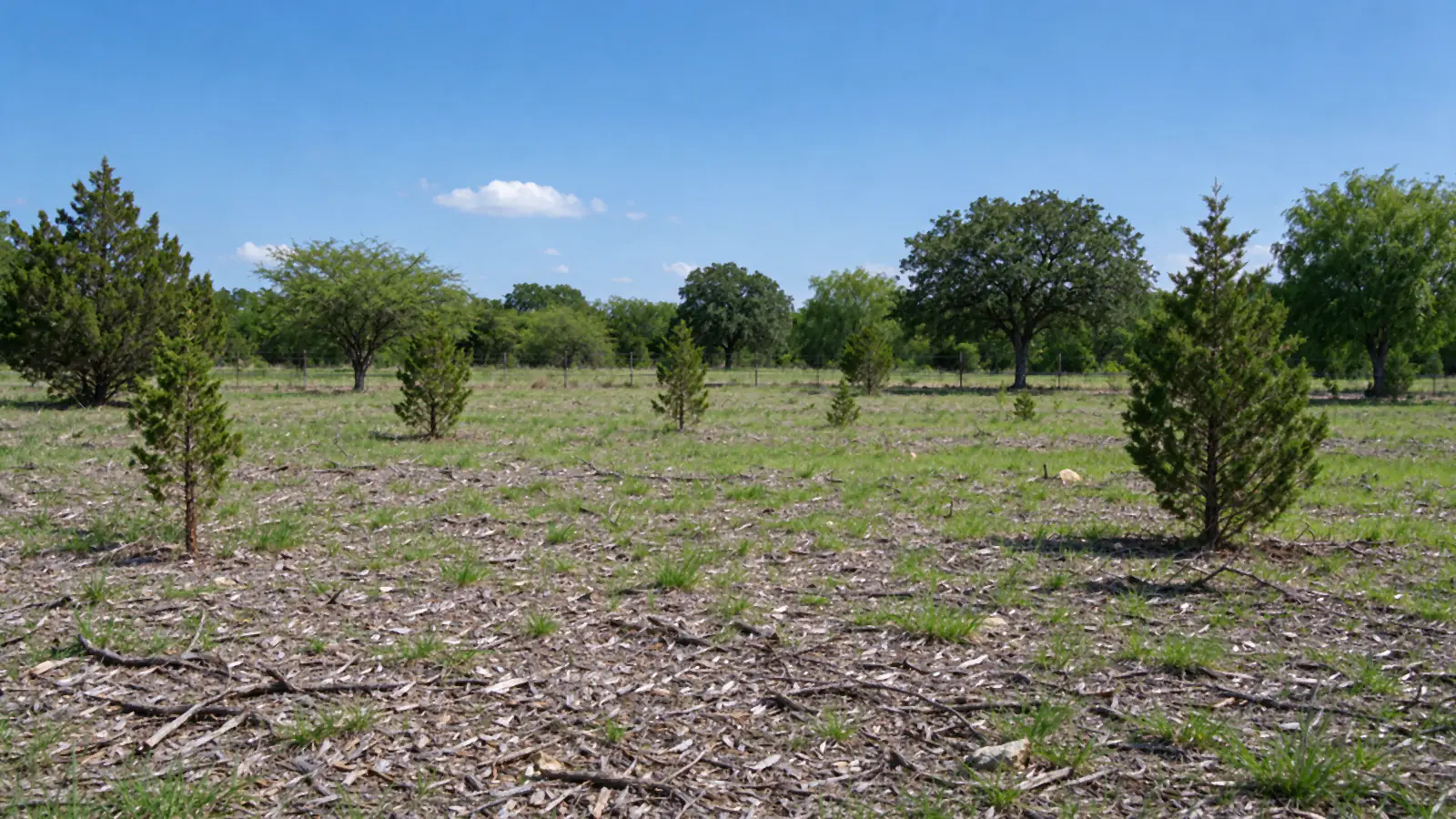
Short answer: spread any deep chip piles, keep trucks off wet ground, mow or spot-treat sprouts in the first growing season, and overseed thin spots ahead of the fall rains. Cedar will not come back from the stump. Mesquite and many hardwoods will, and that first season is when they are easiest to stop.
Arcady Temple Land Clearing arranges forestry mulching across Bell County, and this is the advice owners ask for most once the machine leaves.
What you will see first
Within weeks of the first good rain after forestry mulching, green starts coming through the chips. Some of it is grass that was shaded out by the brush. Some is weeds and forbs from the seed bank. And some is sprouts from stumps and roots of species that resprout.
- Cedar (Ashe juniper): no sprouts. It has no buds on its trunk, so a cut below its lowest green limb kills it.
- Mesquite: clumps of sprouts from buds at and just below the soil line.
- Hackberry, elm and other hardwoods: sprouts from the stump and roots.
- Seedlings: new cedar, mesquite and hackberry from seed, often along fences where birds perch.
The guide on whether brush grows back after clearing goes species by species.
Spread the deep piles
Where a mulcher worked through heavy cedar, chips can pile several inches deep. A thin layer helps grass by holding moisture; a deep one smothers it. Rake or drag deep piles thin over bare ground. Keep mulch from piling against the trunks of trees you kept and against fences and buildings, where it holds moisture against bark and wood and adds fire load in a dry summer.
Keep trucks off wet clay
On the Blackland clays around Temple, freshly mulched ground ruts easily when wet. The chips hide how soft the soil is. Keep trucks and trailers off it after rain, especially in May and from September to October, Bell County’s wettest months. Ruts in clay dry into hard ridges that a mower cannot cross.
Mulched last year and it is closing back in?
A follow-up pass is far cheaper than clearing again. Send photos of the regrowth.
Mow or treat sprouts early
The first growing season is the cheap time to deal with regrowth. Sprouts are soft and small; a mower or brush cutter handles them easily. Left a year or two, they become woody clumps that need clearing again.
- Mowing a few times in the first season knocks back hardwood sprouts and young seedlings.
- Mesquite sprouts come back after mowing, because the buds below the soil survive. Persistent mesquite needs grubbing below the bud zone, about 14 inches, or treatment by a licensed applicator. See why mesquite comes back.
- Hand work near trees you kept avoids barking their trunks. Oaks are not wounded from February through June, when oak wilt spreads most easily, as the oak wilt guide explains.
Seed the bare spots
Grass that comes back quickly is the strongest defense against new seedlings. On most Bell County ground, grass returns on its own once the brush shade is gone. Where the ground is bare, where piles were spread, or where machines turned, overseeding helps. The best time is ahead of reliable rain, so late summer seeding before the fall rains usually gets the strongest start.
What to expect over the next few years
The chips break down over a few seasons, faster where they touch moist soil. Kept trees often fill out with the extra light and water. Cedar seedlings appear slowly along fences and under perches; cutting them while they are knee high keeps the ground open for little cost. A light pass every few years usually keeps a mulched tract looking the way it did the day the machine left.
When a second pass makes sense
If sprouts got ahead of you, or a dense patch was missed, a second mulching pass is usually lighter and cheaper than the first. If the land use has changed, for example a pad is now planned where the ground was mulched, that area needs grubbing, as the mulching versus grubbing guide explains. Wet clay after a second pass needs the same care as the first time, covered in the guide on clearing after rain on black clay.
For a follow-up pass or advice on regrowth, call (254) 269-4999 or send photos below.